FREE sourcing support up to 3%

Eligibility applies to qualified business buyers and is confirmed after we review your product, quantity, destination, and sourcing requirements.

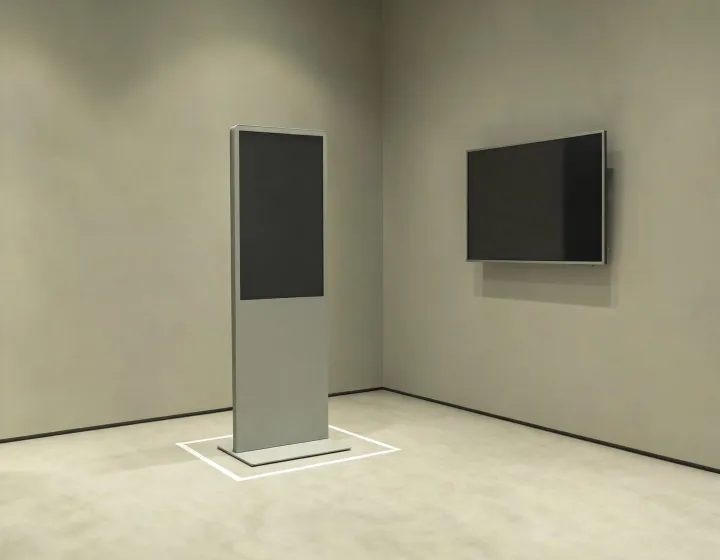
Floor standing signage totem beside a wall-mounted panel in a selection bay

Process and technology selection

floor standing digital signage display

A floor standing digital signage display is a base, a column, and a screen that must share one working envelope. Digital Signage Display Sourcing treats that stack as a selection problem: LCD totem, fine-pitch cabinet on a stand, or a wall panel that should never have been put on a floor. The desk does not weld bases and does not certify tip-over.

Write the footprint in millimeters, the finished height, and the service side before you ask for a price. A 600 mm by 500 mm base and a 1900 mm overall height are example figures a buyer may measure on a drawing. They are not a model this page stocks. Request factory quotes only after the stand and the screen are one configuration.

Selection ledger for a totem

Question wording for video products was checked against the Daktronics indoor display page on 26 October 2026. The ThomasNet RFI note from the same day is the request pattern. Use both as method references. Do not treat them as a shortlist of stands.

In the stand quote

Screen, base, internal cabling, and the control interface mounted in the column, if the bill of materials says so. Rated power should add the panel watts and the player watts. Input voltage still needs volts, hertz, and phase. A single 100-240 V cord is a common question for a totem. Confirm the cord on the proposed drawing.

Outside the stand quote

Floor fixing, seismic restraint, content, and a spare glass or module. Consumables and a spare parts list are separate. Freight of a tall crate and the Incoterm can exceed the gap between two screen prices. Delivered cost includes that crate. Commissioning scope includes who stands the unit up.

Pending site facts

Floor flatness, doorway height, ambient temperature, and noise level at 1 m. Duty cycle tells you whether the player runs 10 hours or 24 hours. Service access from the rear may be blocked once the totem sits against a gondola. Leave 800 mm only if the floor plan allows it. Otherwise ask for front service and record the specification deviation.

Three configurations on the same axes

Axis Floor LCD totem Fine-pitch cabinet on a stand Wall LCD, no floor base
Image structure One panel, often 1080 or 2160 lines. Pitch is not the buying unit. Pixel pitch in millimeters, for example 1.2 mm, 1.8 mm, or 2.5 mm, times the tile count. Diagonal and resolution. A 43-inch to 65-inch band is a frequent indoor question.
Brightness method Indoor nit value with pattern and warm-up. 500 nit is an example, not a pass mark. Nit value per square meter of cabinets. Do not copy an outdoor 5,000 nit figure onto an indoor stand. Same panel method as the totem, without the base in the power sum.
Service access Side or rear door in the column. Working envelope includes the swing. Front or rear module access. Repeatability across tiles needs a stated factory acceptance test. Wall clearance only. No tip-over check for a base.
Power and heat One cord question. Noise level of the column fan matters in a quiet aisle. Higher rated power as tiles increase. Utilities requirement may leave a floor box. Lowest hardware power of the three, still confirmed on the datasheet.
Quote scope Screen plus base plus player, or the quote is incomplete. Tiles, frame, stand, and sending card as separate lines. Panel and mount. A floor stand added later is a new configuration.

How a buyer can repeat the check: record the model label, ask for a full-white brightness reading after 30 minutes, note the meter distance, and compare the drawing footprint with the floor tape. That is a method, not a test this desk has run. Throughput of zones on the player should be demonstrated on the proposed unit, not inferred from a family name.

Trade-offs that stay open

Is a standard totem enough?

A published floor standing size can cut drawing time when the aisle accepts the base. A custom height or a double-sided face is an application-specific configuration with a longer deviation list. Neither choice is superior until the aisle width and the viewing distance, often 1 m to 3 m for a totem, are known.

Does a lower screen price describe the totem?

Lowest equipment price counts only the glass or the tiles. Comparable delivered scope adds the base, the crate, and commissioning. Keep both views. This page will not publish a percent gap. Preventive maintenance of a fan in the column is a later cost, not a discount.

Which rating is comparable?

A headline nit number without the pattern is not comparable to a number that names the pattern. Ingress protection on a totem is unusual indoors and mandatory if the unit moves outside. Do not borrow an outdoor cabinet rating for an indoor LCD column.

What this selection page will not decide?

Tip-over compliance, floor loading, and network security. Those limits belong to your engineer. The application matrix covers rooms. The inquiry labels cover outdoor cabinets. The brief note holds the attribute list. Send the totem file when the footprint is known.

Totem lines to copy into the form

  • Single or double sided, diagonal or pitch, and resolution.
  • Base footprint, overall height, and service side.
  • Player location, input voltage, and duty hours.
  • Quantity, destination, timing, and named drawings.

Request the comparison

Factories should mark included, excluded, and deviated lines. You keep the approval.